Back to the River Map

Scenes from the Chapleau River

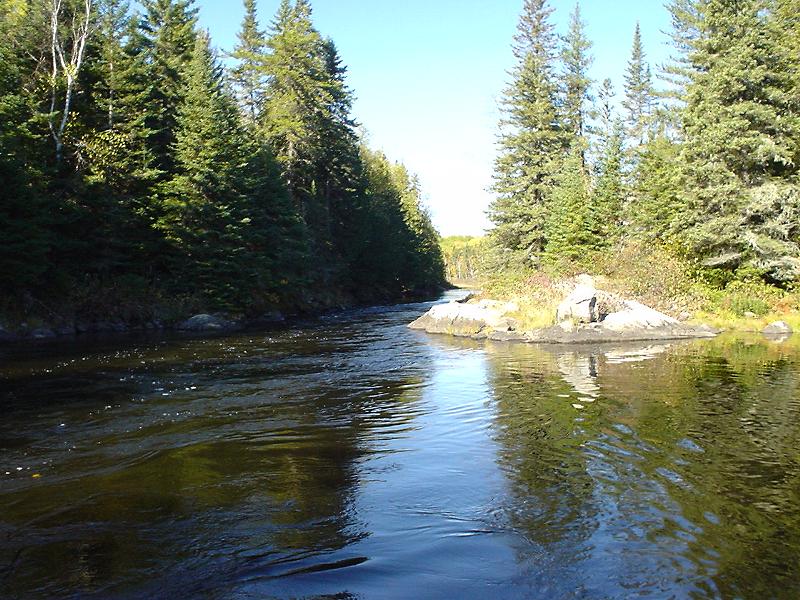
above7 (99K)
Above the 7-Mile Rapids and heading down through. Go slowly and stay in the centre of the channel
during these 100 yards above the rapids. Keep the motor running so that you can steer as you go through.

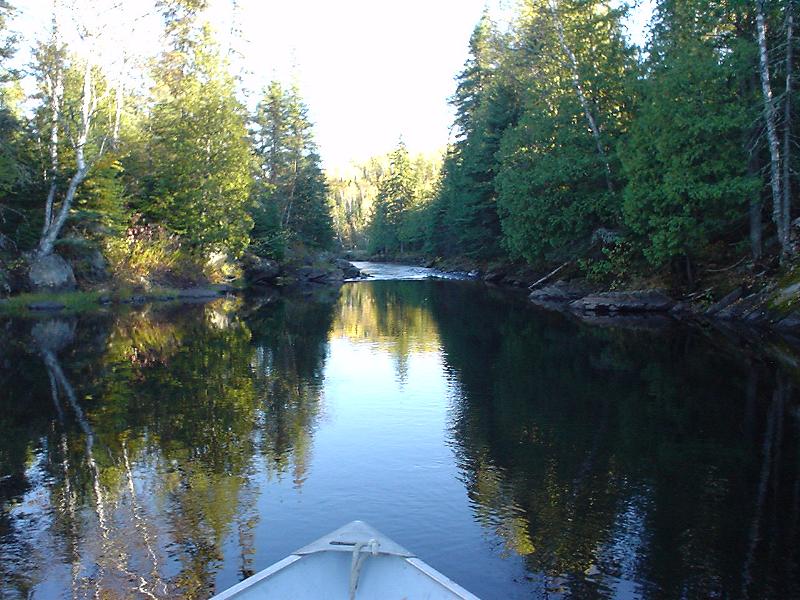
8a (123K)
Below the 7-Mile Rapids and looking back at it.

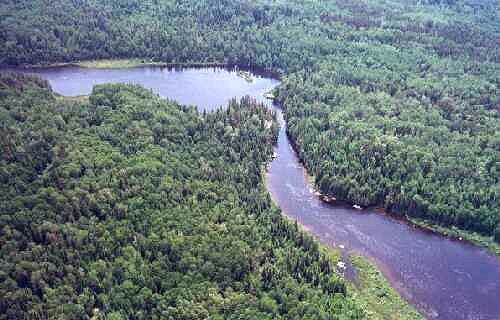
7milefromair (35K)
From the air.
The water flows north. On this photo it flows from right to left because it picture was taken from the west side of the river. The water ends up in James Bay.

The seven-mile rapids is called by that name because there used to be a winter logging road in the early 1900s. It was seven miles from Chapleau to that point. Timber was brought out with horses and sleighs. Now there are no roads along the Chapleau River.

The rapids are only a short piece of swift water, but quite narrow. It is best to keep the motor running at a moderate speed.

Just remember what Humphrey Bogart said to Katharine Hepburn in "The African Queen". He said "you've got to move faster than the water, otherwise you can't steer".

Many years ago, we dynamited some rocks out of the last 100 yards above the rapids. If you follow the instructions below, you will have no trouble. At worst, you might bend a prop or bump the shore.

Going down-stream:

  1. When you have made the final turn (the river bends to the right), you will be about 100 yards from the rapids. Leave the motor in
  2. forward and slow down to a slow troll.
  3. Stay in the middle of the channel.
  4. When you are about to go through the fast water, speed up the motor enough so that you can steer the boat through the narrow stretch.
Please remember though that there are some rocks about 300 yards below the rapids. The rocks are in the middle of the straight stretch that has the high hill on the right. Your best bet is to stay hard right when you are alongside the rocky hill. Once the river widens, you are okay for a while.

Coming back up-stream:
This is easy. Use as much power as you need to make good headway against the fast current and be quick with the tiller, to keep the boat in the middle. Once you are through the fast water, slow down to a troll and remain slow for 100 yards above the rapids. That way you can't do much damage in case you graze a rock. On the picture below, the water flows from right to left (flows north). Other rocks:
The entire area above the seven-mile rapids is clear sailing. Certainly between the camp and town, both along the front river and the back river.

Also the stretch from our camp to the seven-mile rapids is okay. But you should always stay in the middle when you travel through narrow channels at speed. There are always likely to be rocks close to shore, even in places that we consider clear.

Below the seven-mile rapids, one of the worst rocks is the one to the north-west of the little island. I mean the island that is marked in about the centre of our map. That rock is just under water most of the time.

Watch out in the part of Henderson Lake, to the east of the two big islands. The map shows that also. That entire side should be viewed with suspicion. Remember, you can't do much damage when you are moving slowly.


Copyright © 2004 Chapleau.com    All Rights Reserved.